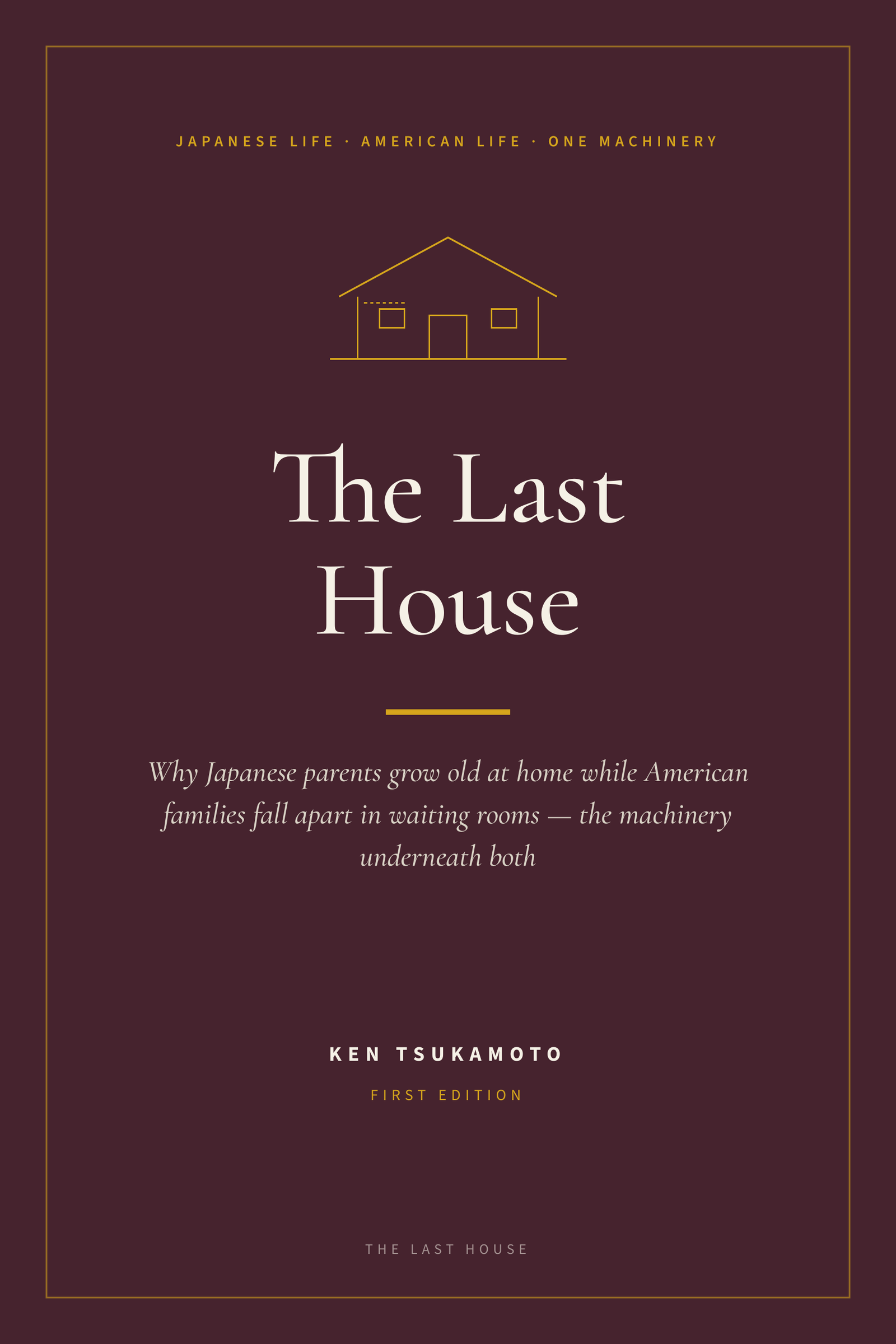
The Last House is a 418-page digital book by Ken Tsukamoto — the dollar notebook, the insurance law that arrives at forty, the structured Tuesday, the watched street, the papers, and the conversation American families have five years too late.
Early-bird price until the launch window closes.
Get the Book — $47Digital book (PDF) · Read on any phone, tablet or computer, or print it · 30-day money-back guarantee · Secure checkout

418 pages · 89 chapters · five appendices · every number in a source ledger
Maybe it's a parent's house you already know you'll be the one to empty. Maybe it's the retirement that arrived and dissolved the week — the first Monday with nowhere to be. The folder you couldn't find in an emergency, because there is no folder. Or the quiet math of living alone and wondering, honestly, who would notice by noon.
Different worries, same cause: in America, growing old is improvised, one family at a time, usually in a corridor, usually at 2 a.m. I grew up in a country where almost none of it is improvised — not because anyone is wiser or more devoted, but because someone built machinery: an insurance law, a hundred-yen notebook, a street four metres wide, a calendar that expects a retired person somewhere every Tuesday. This book takes the machinery apart piece by piece and shows which parts an American family can copy this month, without moving anywhere.
It is not a book that says Japan got it right. There is a whole part on what America does better — and I mean every line of it. And it is not a book about health, medicine or money advice. It is floor plans, paper, and calendars, with a test you can run tonight at the end of every chapter.
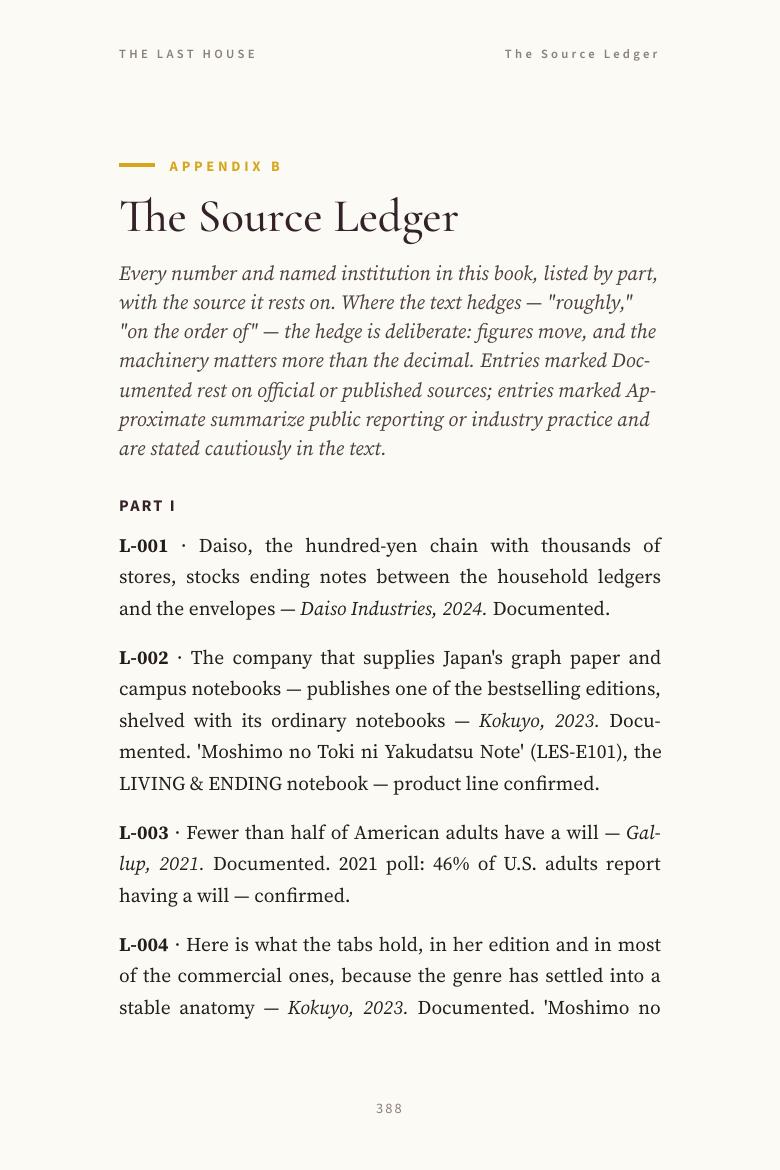
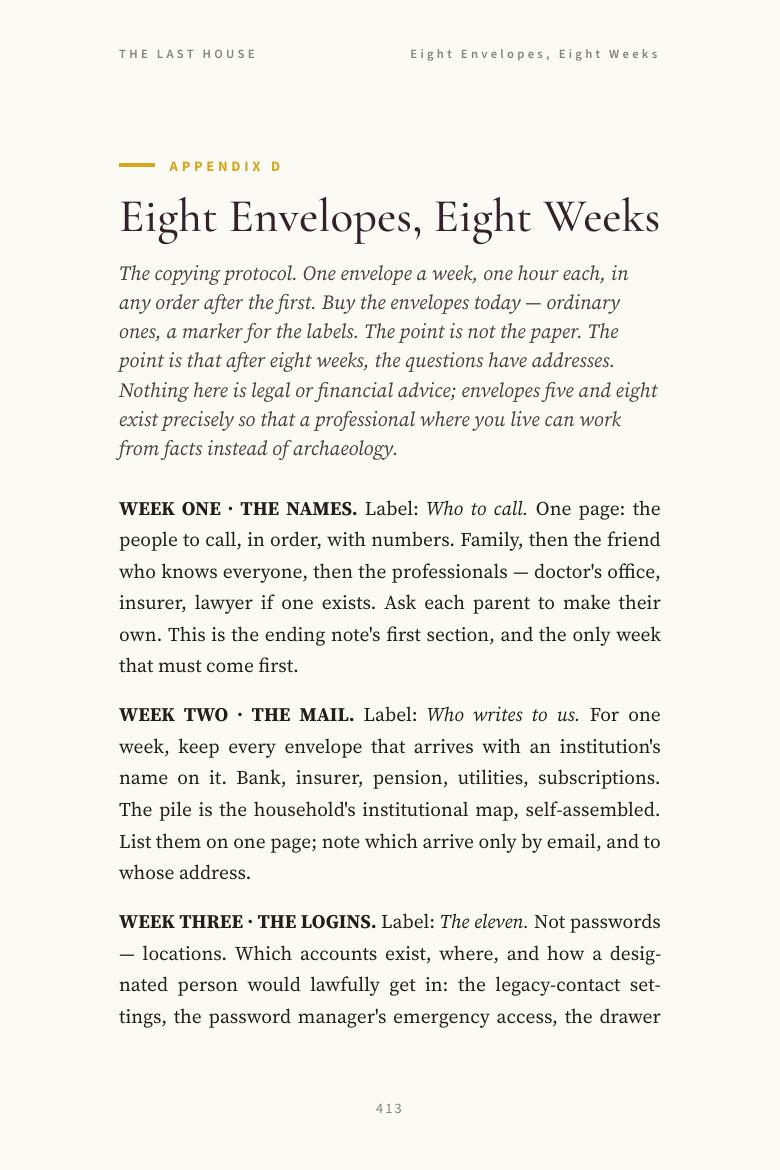
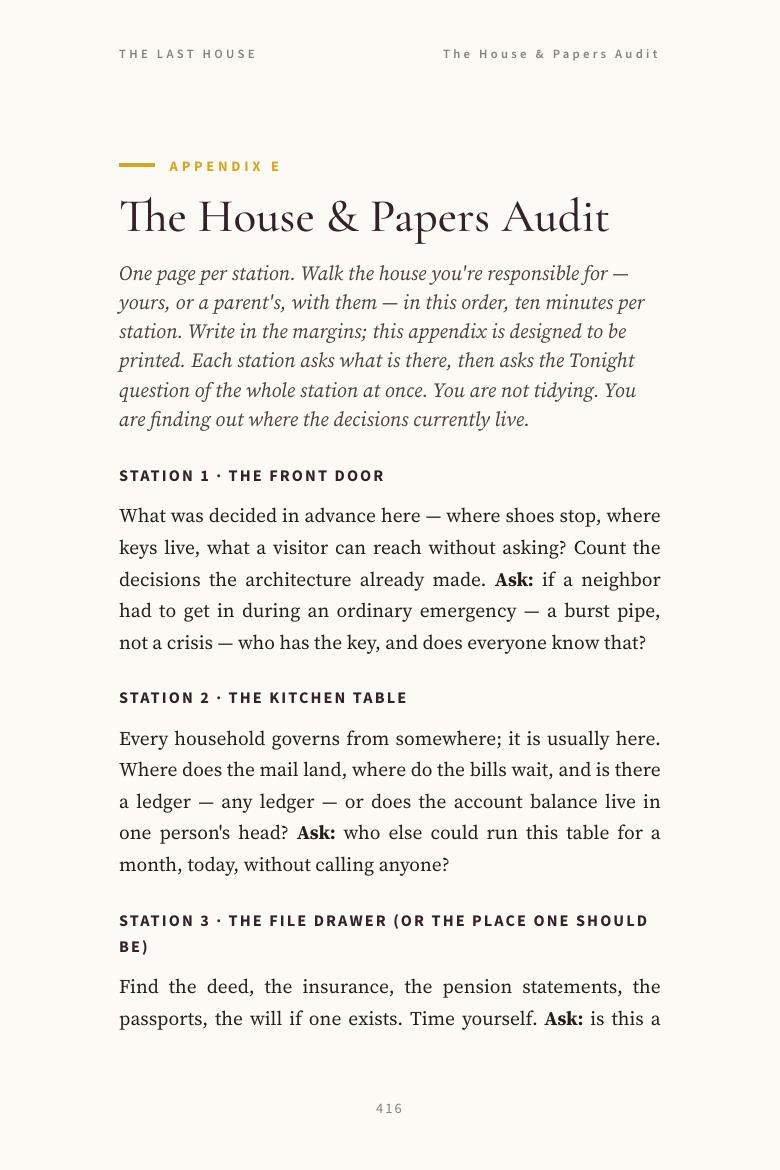
418 pages · 89 chapters · five appendices — including the 130-entry source ledger, a glossary, the myth register, the printable Eight Envelopes protocol, and the nine-station House & Papers Audit.
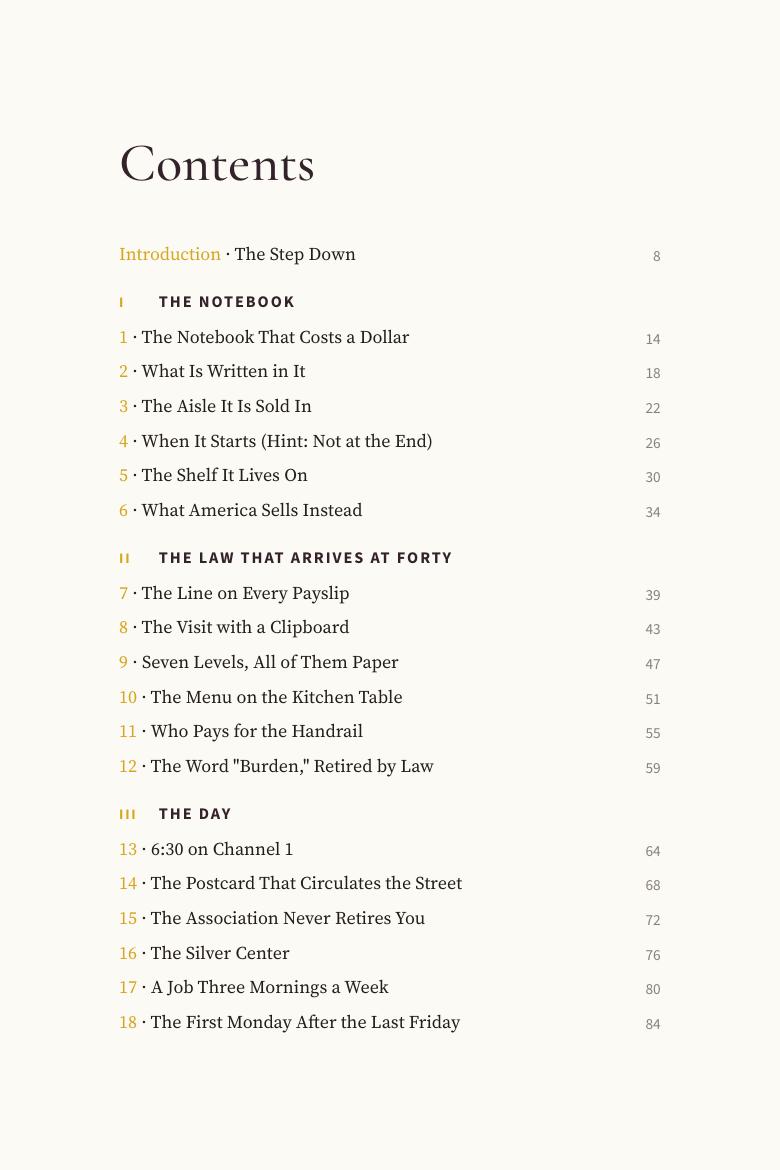
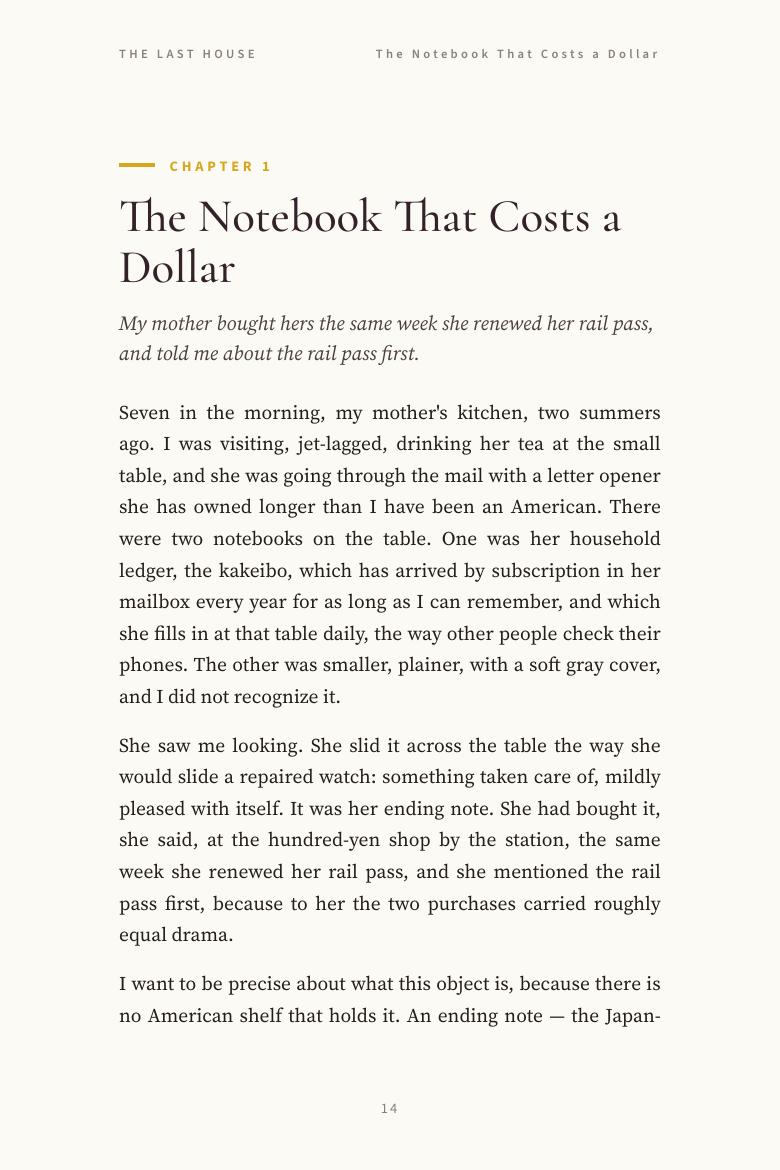
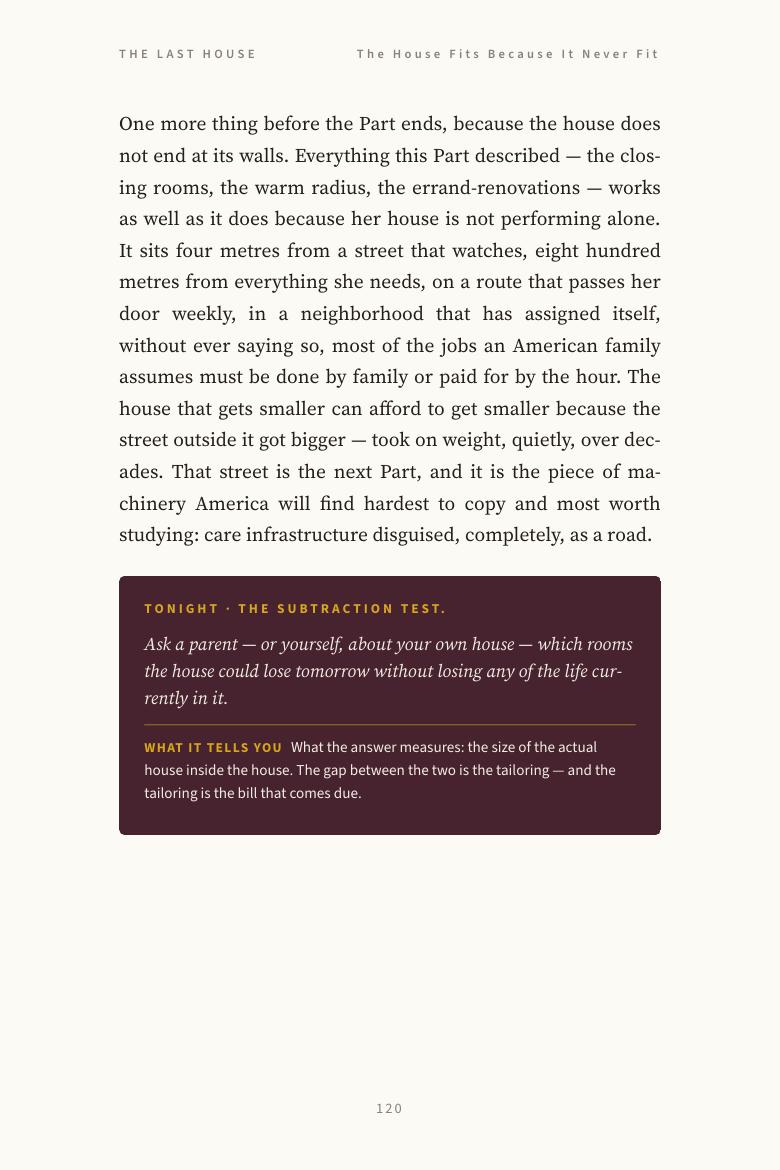
Every chapter has the same four parts: the machinery, named and sourced; the memory from the house I grew up in; the honest concession to America; and a TONIGHT box — one thing to check or ask tonight, and what the answer tells you. Here are eight real pages.


Tap any page to enlarge it.
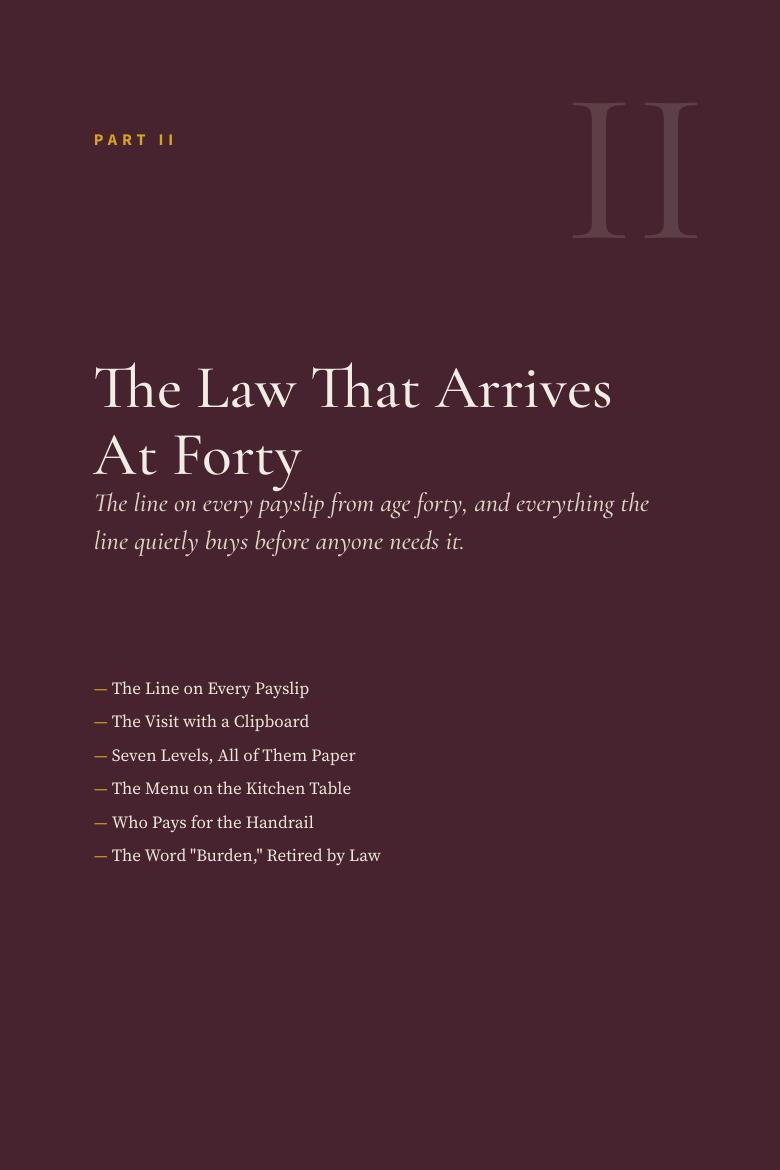
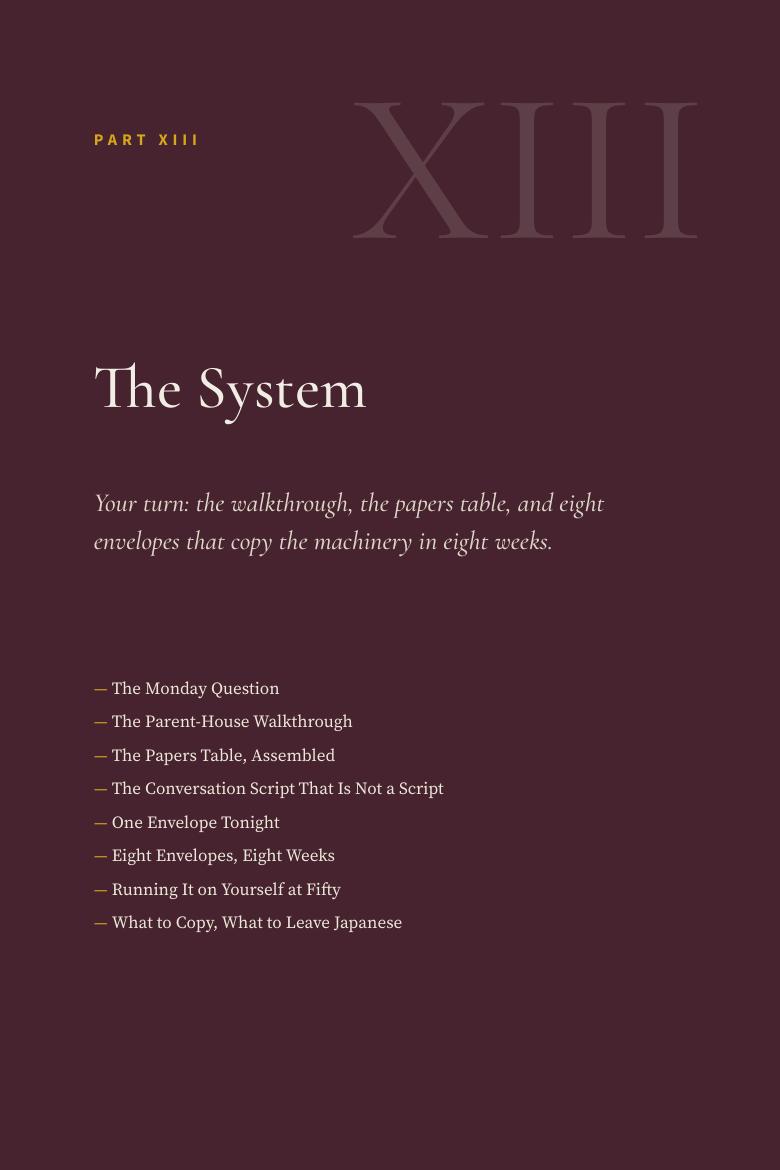
It starts with a notebook and ends with a walkthrough of your own family's house. Fourteen parts, in order.
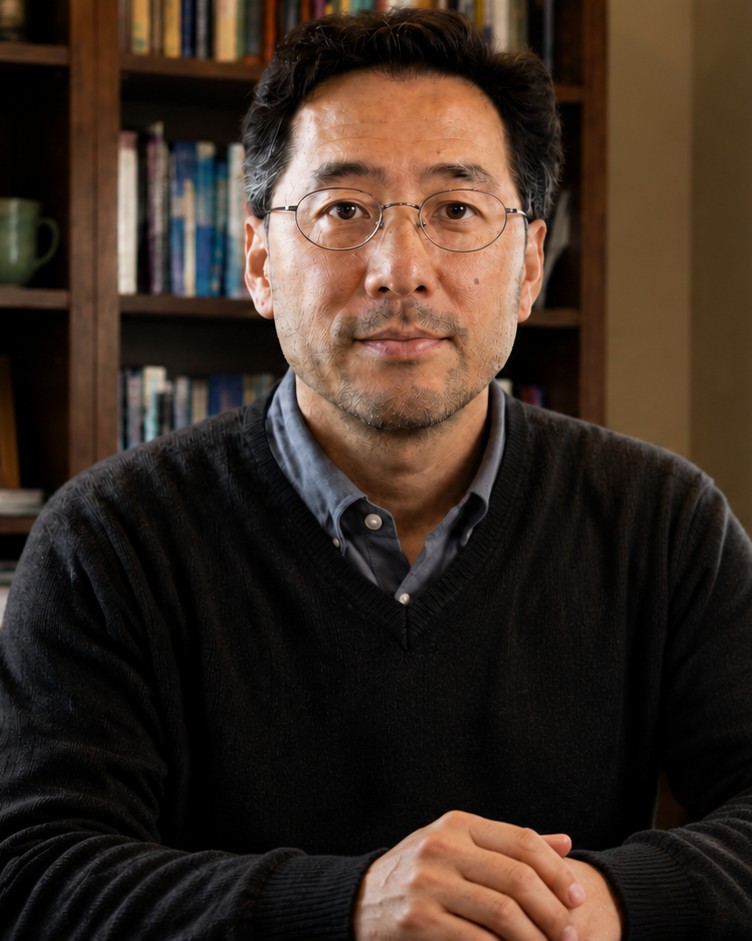
Everyone here calls me Ken. My mother still calls me Kenichi. She is in her seventies and lives alone in the house I grew up in, and I can tell you with something close to certainty how the last chapter of her life will go. Not because I am optimistic. Because I have read the paperwork.
Everything Americans call devotion in how Japan grows old, I found to be machinery: an insurance law on every payslip since 2000, a notebook that costs about a dollar, a street narrow enough to notice a shutter that didn't open, a calendar that expects a retired person somewhere every Tuesday. Nobody in either country chose any of it. That is the book.
I am not the good example. I live in an American house I love, with central heating I defend and a file "system" spread across eleven logins. My own ending note, as of this year, is four pages long and I ran out of nerve before I ran out of tabs. I am writing from inside the American house, not from above it.
Ken Tsukamoto · The Last House on YouTube
Email twohousesbyken@gmail.com within 30 days and I'll refund you. No form, no questions.
A checkout window opens right here on this page.
Card, PayPal or Apple Pay. Checkout is handled by Gumroad, which has processed payments for creators since 2011.
Within a minute. Open it on your iPad, phone or computer — or print it. It's yours to keep.
No. It is a digital book — a PDF file, 418 pages, set at 6 by 9 inches. It reads like a printed book on a tablet, and you can print any or all of it yourself. There is no shipping and nothing arrives in the post.
No, and deliberately so. The book describes systems, laws, paperwork and architecture — how Japan organised growing old, and which parts a family can copy. Every decision that needs a professional is pointed, every time, at an elder-law attorney or estate planner where you live. There is nothing in it about health, treatment, diet or investments.
No. They are siblings, not a series. This book stands entirely on its own; if you've read the other one, you'll recognise the house and the mother, and one closet gets a knowing mention.
You already can. Every iPad, iPhone, Android phone, Mac and Windows computer opens PDFs without installing anything. Tap the link in the email and it opens. On an iPad, tap the share icon and choose "Save to Books" to keep it on your shelf.
Yes. It is set at 6 by 9 inches, which fits letter and A4 paper two pages side by side, or one page per sheet. The Eight Envelopes protocol and the House & Papers Audit at the back are designed to be printed.
Yes, with a caveat. You can send the PDF to your Kindle by email and it will open, but the pages will be small on an older Kindle. It is far better on an iPad, a Kindle Fire, a laptop, or on paper.
Yes. I never see your card. Payment is handled by Gumroad, a checkout company used by hundreds of thousands of writers and creators. Your card details go to them, encrypted, and never to me. PayPal and Apple Pay work too, if you'd rather not type a card number at all.
It is 418 pages and every number in it sits in a source ledger I stand behind. A hardback of this size would be $40 to $50 in a shop, and I would have to sell it through a shop. This way you pay less than that, it arrives in a minute, and the price includes a full refund if you decide it isn't for you.
Yes. $47 is the early-bird price for the first readers. When the launch window closes it moves to $79. If you can see the $47 price on this page, it hasn't yet.
Email twohousesbyken@gmail.com and I will send the file directly to you. Gumroad also keeps a copy in your account, so you can download it again any time, on any device.
Chapter 1 — The Notebook That Costs a Dollar. The object the whole book is built around. Enter your email and it opens right here — I'll send a copy to your inbox too.
One email with the chapter. If you buy the book later, I stop mentioning it.
And who is expecting you, the year you retire? That is the Monday Question, and it is chapter 78. The machinery that answers it costs about a dollar to start.
Early-bird price until the launch window closes.
Get the Book — $47Digital book (PDF) · 30-day money-back guarantee · Secure checkout